
Relationships, Capital, and AI: What We Took Away from the California Department of Insurance Diversity Summit
Practical takeaways from the 2026 California Department of Insurance Diversity Summit: state contracting goals, what corporate buyers want, AI and cybersecurity basics, and how to prepare for capital and succession.
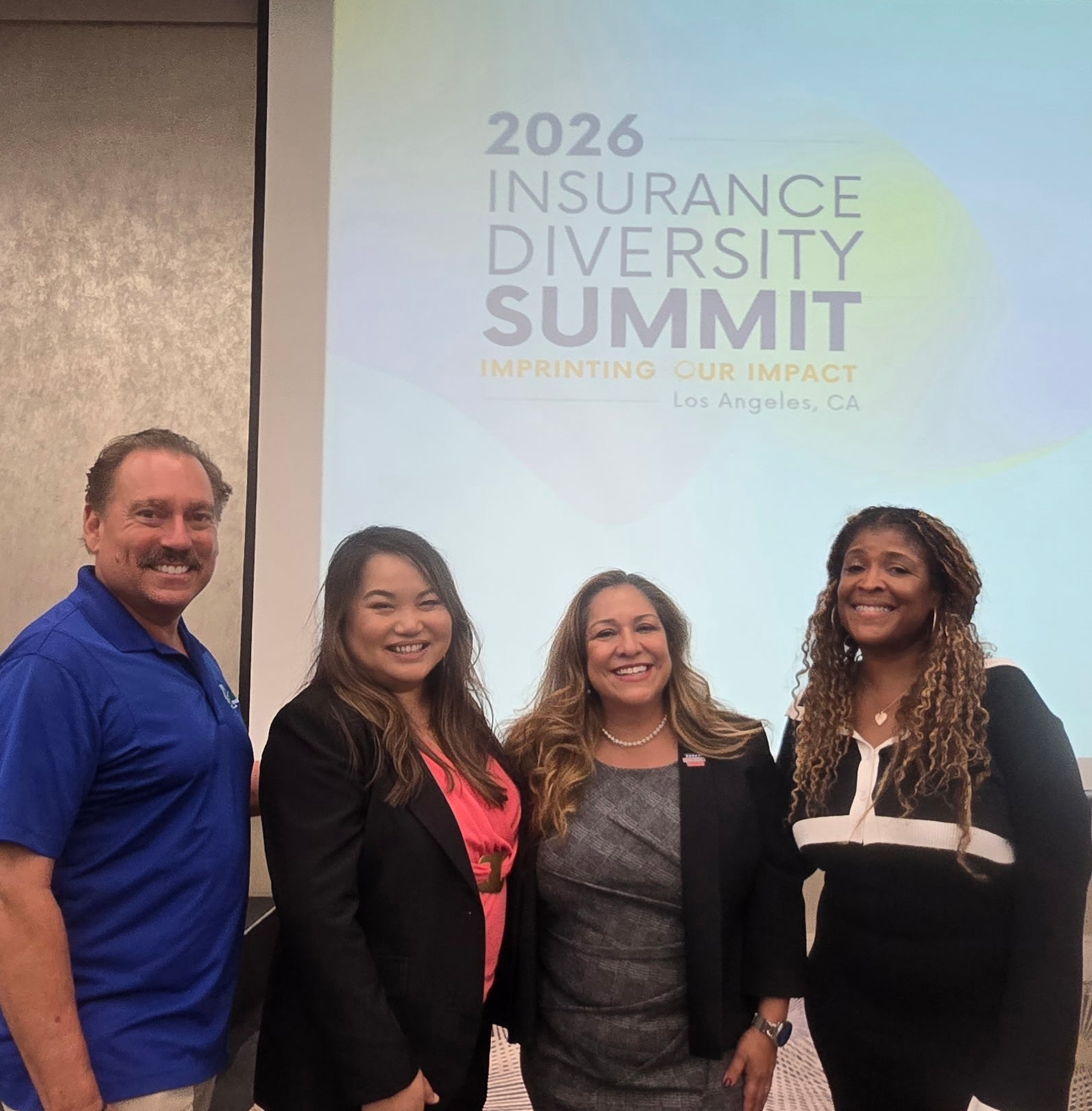
Yesterday we spent the day at the California Department of Insurance Diversity Summit, a free event that put diverse business owners in the same room as state agencies, major corporations, lenders, and investors. As chair of the Insurance Diversity Task Force, we are proud of what this summit has become. It offers practical information and real introductions, and it does not stop at inspiration.
Three sessions stood out. Here is what business owners should know.
Get ready, get connected, get contracted
The contracting panel brought together the California Department of General Services (DGS), Blue Shield of California, and State Fund. The message was consistent: a certification opens the door, but you still have to walk through it.
What is changing at the state level. DGS shared that state departments are expected to direct 25 percent of their contracting dollars to small businesses and 3 percent to Disabled Veteran Business Enterprises (DVBEs). The accountability around those goals is getting stronger.
Departments now file annual equity-in-procurement reports. A department that misses its goals in three out of five years faces remedial action from DGS. That can mean more outreach, unbundled contracts, contract-specific goals, or more advertising. New regulations let departments designate solicitations between $250,000 and $3.5 million to be bid on and awarded only to small businesses, so you compete against companies your own size.
What corporate buyers want. Blue Shield of California said 11 percent of its spend goes to diverse suppliers, and it also measures its primary vendors on how many diverse suppliers they use. But the panelists were direct that being a diverse supplier does not win you the business. You have to bring a solution to a problem they have, and cost containment is a big one right now. State Fund’s procurement leader said the suppliers who win are the ones who have built real relationships with the supplier diversity team, and who show up to presentations prepared and with well-informed questions.
Your action steps:
1. Register in Cal eProcure and add your supplier diversity information.
2. Use the DGS data dashboards to see which departments buy what you sell, then contact their small business advocates.
3. Reach out three to six months before a contract expires. Ask the contract manager to put you on the bidder interest list.
4. Use Small Business Development Centers and APEX Accelerators to help assemble bid packages, and follow every form and deadline to the letter.
5. Attend the solicitation Q&A. It is a chance to ask questions, and it can also be where you suggest a better product. One panelist said the state has acted on exactly that.
AI and cybersecurity: governance over fear
The AI cybersecurity panel was one of the most useful of the day, and the closing remarks named AI as a top takeaway. The panelists said the fundamentals have not changed, but the speed of the damage has.
The risks they flagged. Unknowing actors: employees can leak sensitive data into AI prompts without meaning to, and one panelist described non-programmers building tools with AI and pasting server keys into prompts. Easier attacks: one panelist described a hacking exercise where students with no experience took over a test server using ChatGPT. Fake employees: threat actors are posing as job candidates to get inside company systems, so hiring due diligence now matters for security too. Third-party chains: the AI tools you use may pass your data to other providers, so know where your data travels.
What to do about it. Turn on multi-factor authentication and endpoint security. Check the privacy and retention settings in every AI tool you use. Apply the social security number test: if you would not type it into the tool, do not upload it. Understand the difference between free and paid tools, because free versions often train on your data while enterprise licenses generally keep it in your own environment. Read the license terms, including who owns what the tool produces.
Share only the minimum data an AI tool needs to do its job. Make an inventory of your crown jewels, the data that would hurt most if it got out. Clean up your email habits before connecting AI to your inbox, because raw passwords and documents with personal information should not be sitting there.
The panelists advised against banning AI, saying a ban just pushes people toward unmanaged tools. They defined governance simply: rules that are actually enforced. Put approved tools into onboarding and update your policies at least quarterly. They also noted that corporate buyers are updating their supplier security questionnaires to ask how you use AI. One suggested asking an AI tool which standards a prospective customer follows, so you arrive prepared.
On accessibility, the panel saw real upside. AI can lower language barriers and support people with disabilities, but it can miss cultural nuance, so a human should review anything published in your name.
Capital, equity, and succession
The capital panel covered where the money is and how to get ready for it.
Loans versus equity. Loans from banks and CDFIs suit bridge financing, buyouts, and acquisitions. If you are expanding into new markets or need more than your balance sheet can support, you may need an equity partner. A panelist from Faros Capital, an impact investor focused on healthcare disparities, explained how his firm works and described the California Organized Investment Network (COIN). That program, run by the Department of Insurance, encourages insurers to invest in projects that benefit underserved communities across the state.
SBA loans come through lenders. Aside from disaster loans, the SBA does not lend directly; you work with a participating lender. A simple first step: ask your own banker whether the bank offers SBA loans, and talk to your Small Business Development Center advisor for free.
Bankability comes down to three things: cash flow, credit, and collateral. Tell your banker and your CPA what you plan to borrow for, because a CPA focused only on lowering your taxes can shrink the profit a lender looks at. Build your bail team: a business banker, a CPA, an attorney, and an insurance agent.
Succession is a major wave. With a large number of owners nearing retirement, SBA acquisition financing can let employees or managers buy out the owner with up to 90 percent financing. If your contracts depend on a minority-, women-, or veteran-owned certification, that certification can change what your company is worth in a sale, so it is worth planning for before you sell.
Two policy items were also raised. The SBA’s proposed small business size standards are in an extended comment period, and small business owners were encouraged to weigh in. One of the SBA lenders on the panel said current rules require 100 percent U.S. citizen or national ownership for SBA loans, and pointed to a drop in Los Angeles District Office lending that he linked to the change.
Kaiser Permanente also mentioned its Building for Impact program for construction contracting. An event is planned in Pasadena on October 29.
Recognizing the people behind the work
A highlight came near the end, when the Department honored the chief of its Office of Insurance Diversity and Innovation on behalf of Commissioner Ricardo Lara, who is in his final year in office. The tribute recognized her work on the Insurance Diversity Index, her representation of California on national platforms, and her stewardship of the Insurance Diversity Task Force. In her remarks she credited her team and said the department is staying grounded in its mission to serve Californians, even as political headwinds shift.
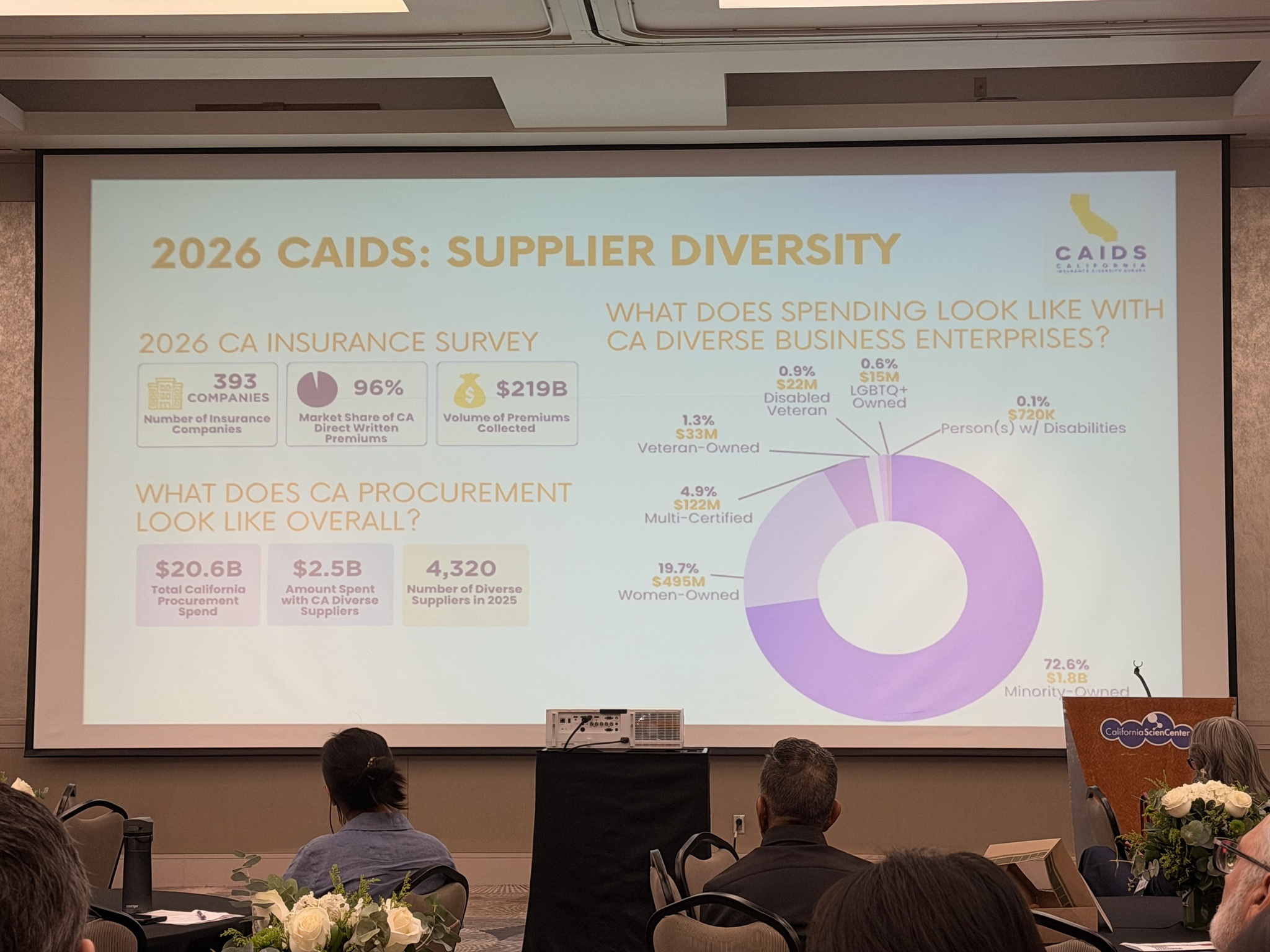
The two takeaways
The closing remarks boiled the day down to two points.
1. AI is not going anywhere. Learn it and use it safely.
2. Relationships drive business. People buy from people they know and trust. Leave every event with two or three new contacts you did not have when you arrived. The day ended with one-on-one matchmaking sessions with AT&T, Blue Shield of California, DGS, Inclusive Action for the City, Kaiser Permanente, and State Fund. That is where much of the real value happens.
Join us
At the California Rainbow Chamber, a statewide organization, our work is to connect our members to these kinds of opportunities. If you are a business owner who wants help getting certified, finding supplier diversity contacts, or preparing for your first bid, reach out to us at membership@calrainbowchamber.org.