
What the 2026 CPUC En Banc Means for LGBTBEs
LGBT-owned businesses received about 0.10 percent of reported utility procurement dollars in 2025. Here is what the CPUC’s 24th annual Supplier Diversity En Banc means for LGBTBEs.
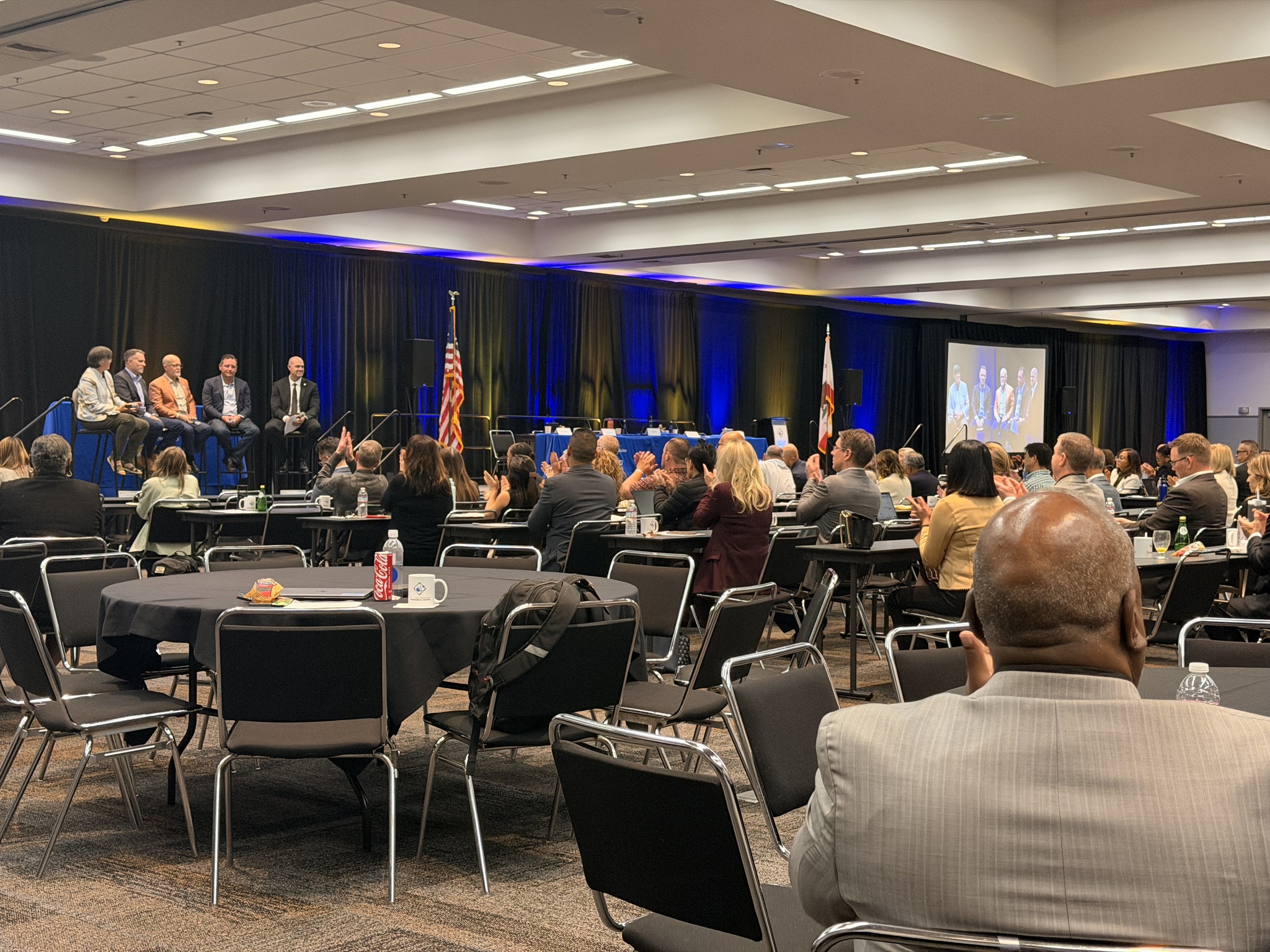
LGBT-owned businesses received about 0.10 percent of the procurement dollars reported under California’s utility supplier diversity program in 2025, and that number was the one to watch at this year’s CPUC En Banc.
On October 1, the California Public Utilities Commission held its 24th annual General Order 156 Supplier Diversity En Banc in South San Francisco. California Rainbow Chamber was there for the opening remarks, the 2025 results, the supplier and community panels, the utility executive panel, and public comment. This post covers the high-level takeaways and, in particular, what they mean for LGBT business enterprises (LGBTBEs).
A quick primer: General Order 156 has required California’s utilities and telecom companies to plan for and report on contracting with diverse suppliers since 1988. It runs on voluntary goals, not set-asides or preferences. In 2022 the Commission extended reporting to community choice aggregators (CCAs) and electric service providers, which is why progress here depends so much on relationships and on who gets certified, counted, and invited to bid.
The 2025 numbers: more dollars, smaller share
Reporting entities spent $13.2 billion with diverse suppliers in 2025, up slightly from $13.1 billion in 2024, but diverse suppliers’ share of total procurement fell from 30.1 percent to 28.8 percent. Dr. Tara Lynn Gray of NAWBO California explained why: total utility spending is growing faster than diverse spending, driven by wildfire mitigation, grid modernization, broadband, clean energy, and new technology.
A total of 56 entities reported, including 17 CCAs and 11 electric service providers. Together they brought on 335 new diverse prime contractors and 342 new diverse subcontractors. CCA diverse spend more than doubled in five years, from $3.5 million in 2021 to $7.6 million in 2025.
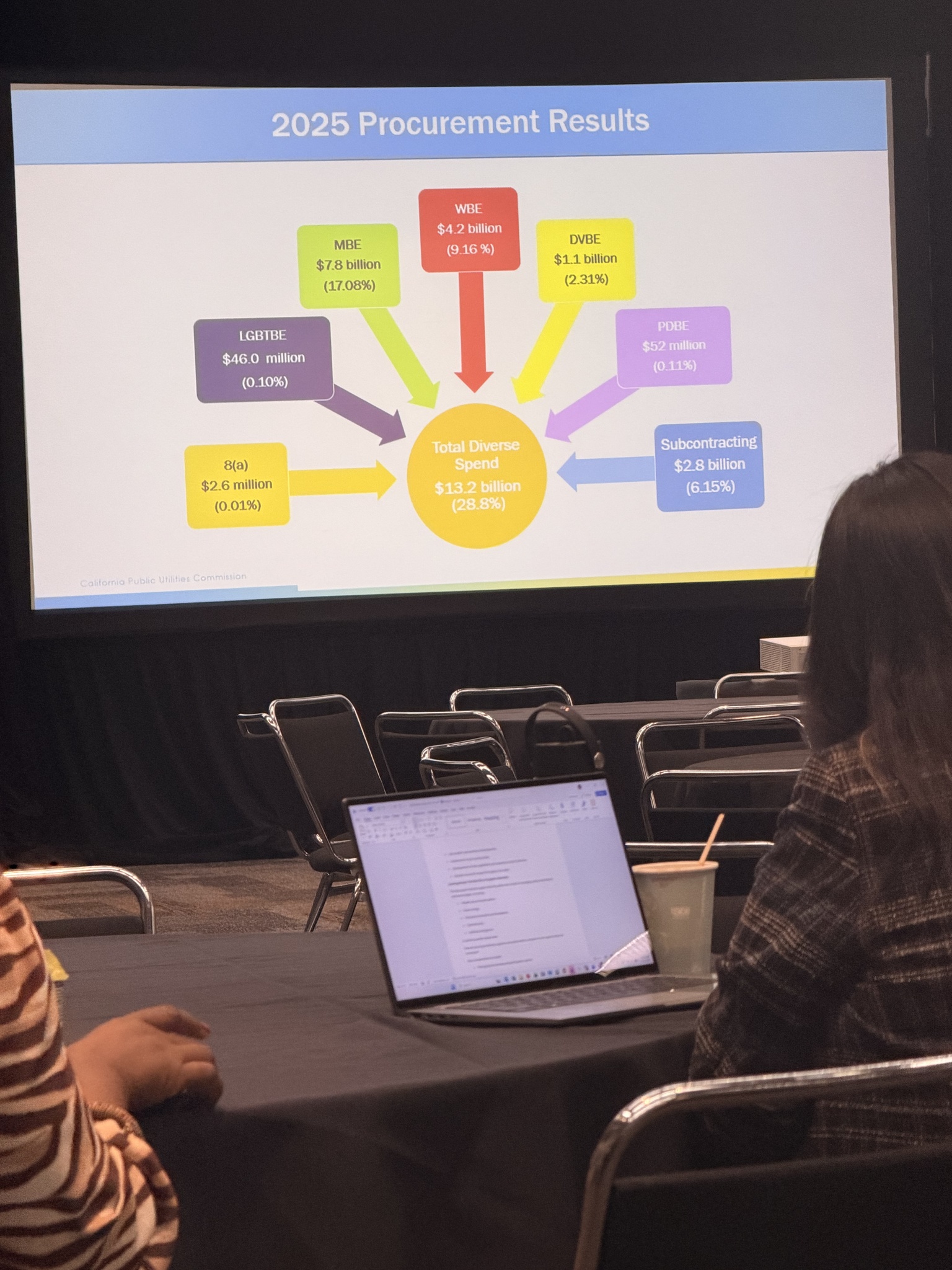
Here is how the 28.8 percent breaks down by category: minority-owned businesses (MBE) 17.1 percent, women-owned businesses (WBE) 9.2 percent, disabled veteran-owned businesses (DVBE) 2.3 percent, persons with disabilities 0.11 percent, and LGBT-owned businesses (LGBTBE) 0.10 percent.
The commissioners framed this as the start of a “next era” for the program. The theme was moving from access, meaning getting diverse firms in the room, to capacity, meaning making sure they can win and carry larger, more complex work.
What it means for LGBTBEs
The numbers raise an important question: If hundreds of LGBT-owned businesses are already certified, why does LGBTBE procurement remain at just 0.10%? Certification alone does not explain the gap. Utilities and advocates need to examine whether LGBT-owned businesses are being connected to relevant opportunities, included in competitive solicitations, and supported in developing the capacity to win contracts. The CPUC’s Supplier Clearinghouse holds 11,309 certifications across more than 10,000 suppliers, and 314 of them are LGBT, roughly 2.8 percent of certifications. LGBT spend is 0.10 percent of procurement. Certifications and dollars are not a like-for-like comparison, but the distance between 2.8 percent of certifications and 0.10 percent of spend is exactly the kind of gap that needs a clear explanation. CPUC staff also pointed to LGBT as a category with room to grow.
In dollar terms, the figure is small. The results slide above reports $46.0 million in LGBTBE spend for 2025, out of roughly $46 billion in total procurement across the state.
Technology is the clearest opening. SDG&E said about 41 percent of its spend is diverse, but only about 25 percent of its technology spend. It named a drone services supplier that is LGBT-, veteran-, and woman-owned as an example of diverse firms helping with wildfire safety and outage response. SoCalGas said more than 50 vendors worked on its multi-year customer billing system replacement in 2025, over half of them diverse, with ongoing needs in testing, training, and change management. Another speaker described a managed service provider that grew its diverse spend from 0.5 percent in 2021 to 10.5 percent in 2025. Dr. Gray’s list of where the next decade’s dollars go: grid hardening, battery storage, EV infrastructure, cybersecurity, data, and AI.
Ownership structure matters if you plan to raise capital or sell. One panelist warned that private equity investment above 51 percent ownership can end a firm’s diverse business status, and said one investor program the panelist attended would not back companies with supplier diversity contracts. If you are an LGBTBE planning for growth capital or succession, set the ownership structure with certification in mind, before you sign a term sheet.
Primes are where many small firms enter, and where reporting can slip. Several community panelists said some prime contractors have pulled back on diversity participation and, in some cases, stopped reporting their diverse subcontractor use up to the utilities. They asked the Commission to keep enforcement strong. If you are a subcontractor, ask your prime to report your spend to the utility.
The barriers everyone named
Insurance requirements came up in nearly every session, and it was the one barrier suppliers, utilities, and CPUC staff all agreed on. Here are the specifics.
Insurance: One panelist who works as a contractor checked the subcontract templates they use and found the limits were higher than their own customer required, because primes copy the utility’s requirements and pass them down. One prime contractor described asking firms only a few years old to carry $5 million to $10 million in coverage. The CPUC is reviewing the issue through a dedicated task force, and a cross-functional session with utilities and insurers took place on June 18. One panelist floated a state-backed insurance pool.
Visibility: Community organizations asked utilities to share what they will buy two to three years out, not just when a request for proposals is released, so firms can invest in certifications and capabilities in time. They also asked for real feedback when a bid is lost.
Matchmaking that goes nowhere: Several panelists said “meet the prime” events can become a box-checking exercise. Structured programs got the praise, including SCE’s EDGE mentorship program and the ELEVATE program at SoCalGas and SDG&E. One veterans group reported that 13 member companies, working with utility executive sponsors over 10 sessions, put in 23 bids tied to more than $150 million in contract dollars.
Prerequisites that block new firms: One prime described needing a three-year experience modifier rating for safety, plus a variance process that took six months for a critical project.
Payment and capital: Subcontractors said late payment hurts even firms that win work. Dr. Gray put the capital problem plainly: you cannot bond a $20 million job on a $200,000 line of credit.
Compliance: One panelist asked for cybersecurity and similar requirements to be phased in after award, so they do not block a firm from bidding on day one.
What the utilities committed to
The closing executive panel ended with each company naming a commitment for the coming year. Everything below is what each company said from the stage in South San Francisco, so treat these as commitments announced at the En Banc rather than policies already in place. The Chamber intends to follow up on each one during the coming year and report what actually changes for suppliers. The commitments most useful to small suppliers:
Verizon announced at the En Banc: Net 30 payment terms for small business suppliers; insurance and indemnification requirements tailored to business size, scope, and job risk; a minimum subcontracting threshold for its prime contractors; and a prime supplier portal that matches subcontractors with primes. Its Small Business Supplier Accelerator, announced that week, pairs $500 million in planned spending with California small businesses with free access to operational tools through Impact Ready. Some community panelists said they want direct opportunities from Verizon, not only a portal.
SCE: A formal supplier feedback process, so suppliers can say what is easy and hard about working with the company without waiting for the annual report. SCE also said it is moving supplier inclusion earlier in business planning and engineering.
SDG&E: Bids written across multiple insurance tiers, and insurance limits cut by more than half in some areas. It also described a single supplier diversity team shared with SoCalGas.
SoCalGas: More structured, regular supplier meetings and insurance minimums that fit the work instead of a one-size-fits-all standard. It reported 27 meetings with prime contractors this year.
T-Mobile: Refreshing emerging-technology supplier categories each quarter, and building a pipeline of suppliers before a request for proposals is issued.
San Jose Water: A “Meet the Prime” event on October 13 with the California Water Association, plus a goal of adding suppliers to its list for next year.
One utility committed to publishing an insurance requirements matrix on its website and adding at least 100 participants to its technical assistance program, with more in-person sessions.
Subcontracting Should Be a Pathway, Not a Destination
CPUC Executive Director Leon made the point directly at the En Banc: subcontracting exists to help firms build the experience and capacity to eventually compete for prime contracts. A subcontract that renews year after year without building capability or a record of performance is not progress, and the share of reported dollars reaching LGBT-owned firms still sits at 0.10 percent.
The panels offered proof that the pathway works when it is built with a destination in mind. One veterans group reported that 13 member companies, working with utility executive sponsors over 10 sessions, submitted 23 bids tied to more than $150 million in contract dollars. SCE’s EDGE mentorship program and the ELEVATE program at SoCalGas and SDG&E drew praise for the same reason. Reporting entities also brought on 342 new diverse subcontractors in 2025, which is the pipeline this pathway depends on.
The obstacles are already known. Panelists said “meet the prime” events can become box-checking exercises instead of introductions to real scopes of work, and that primes copy the utility’s insurance requirements and pass them down to firms that are only a few years old. If subcontracting is meant to build capacity, the requirements attached to it should be sized for that purpose, and reporting should show whether a firm actually moved from subcontractor to prime.
What LGBTBEs can do now
The utilities said repeatedly that they want more qualified suppliers in front of them. These are the steps that came out of the day for LGBT-owned firms:
1. Get counted. The CPUC’s Supplier Clearinghouse exists so utilities’ reporting stays accurate, and it works with reciprocal certification partners. If you already hold an LGBTBE certification, ask the Clearinghouse how it applies to registration there.
2. Get on every list. Join each utility’s supplier database and bidder interest lists, and send a capability statement to the supplier diversity team. Panelists advised contacting current contract managers three to six months before an expiring contract is rebid.
3. Ask early, ask specifically. Utility and supplier panelists said to ask what work is coming in the next one to two years, read the utility’s rate case and wildfire mitigation filings, and show up with ideas. Several utilities said they want suppliers to tell them what problems they could solve.
4. Negotiate insurance with the prime, too. Ask whether limits can be tiered or tied to the actual scope of work, and ask when coverage is required, since it is often at award rather than at proposal.
5. Ask your prime to report you. If you work as a subcontractor, confirm that your spend is reported to the utility.
6. Plan your ownership before you take investment. See the 51 percent point above.
7. Weigh in on the SBA size standards. A speaker at the En Banc noted that the SBA’s proposed small business size standards could change who qualifies as small, and that the comment period was extended to November 20. Read the proposal and submit comments if it affects your business.
The California Rainbow Chamber believes the next era of supplier diversity must be measured not simply by how many businesses become certified or attend matchmaking events, but by how many secure contracts, increase revenue, build capacity, and advance from subcontractors to prime contractors.
With LGBT-owned businesses receiving just 0.10% of reported utility procurement in 2025, there is considerable work ahead. We look forward to working with the CPUC, utilities, prime contractors, and fellow business organizations to identify the barriers behind that disparity and create measurable pathways to greater LGBTBE participation.
If you are an LGBT business owner looking to work with utilities or other large buyers, reach out at calrainbowchamber.org.
Figures in this post come from CPUC staff and panelist remarks at the October 1, 2026 En Banc. The CPUC’s full 2025 GO 156 report has the complete data.